I am back after a 6-month hiatus

Indeed, I am back after a 6-month hiatus, but my creative mind is still not fully with me. I feel empty, lost, alone, shocked, and bewildered after loosing my beloved and most cherished wife and intimate friend of 44 years to glioblastoma, grade IV (a very progressive brain tumour/cancer). She was diagnosed in early September 2018 and was on heavenly abode on February 11, 2019. The cancer swallowed her at such an incredible speed that we, as a family, are still mesmerized. I still can’t believe she’s gone and has left me in such a deep and dark hole that I may never be able to come out of it.

But try I must. My very resilient nature won’t allow me to throw-in the towel and accept to live with the past in depression and solitude. I firmly believe that life must move on. Moreover, I console myself by repeatedly uttering the universal truth that of the couple, no two spouses die at the same time – one is always left behind (statistically speaking, it’s mostly the woman as her man dies earlier).

Granted, no one ever will or could fill the vacuum she has left behind, I still have to find the will to live a creative and productive life for my children and grandchildren. And for a writer, what else is there to engage him/her in such a life other than writing itself. I will eventually find my salvation in continuing to write – an activity I dearly loved and lived for while she was around. I think she would be happy to see me pursue my passion.

For those who don’t know me, or are not aware of my love of writing, I humbly invite them to visit my site https://www.rajchawla6.com. You will find three books (two fictions and a non-fiction) released between June 2016-18, besides umpteen analytic papers published while employed at Statistics Canada, Ottawa, Canada. These books can be purchased at https://www.amazon.com/author/paulshona; and for those living in and around Ottawa, these books are available at Ottawa Public Library.

Considering how fast the brain cancer drained my wife’s health, mobility, speech, and memory, making her totally dependent on nurses and orderlies for her day-to-day activities, and how she moved from hospital to hospital (for example, she had brain surgery done at the Ottawa’s Civic campus, her dual therapy of radiation and chemo at the General campus, treatment of brain injury at Ottawa University’s Rehab Center, then back to General campus for maintenance of chemo therapy, and finally for the maintenance care at St. Vincent Hospital – where she eventually died) and was exposed to different caring staff with different personalities and standards of care, I plan to write a book on what she went through including the kind of care and treatments she received from professional doctors, nurses, and orderlies working under our universal Health Care System. As one of the oncologists mentioned at one of our meetings, “The system is not perfect, but still, it’s working.” The book will heavily draw on the daily journal I kept while visiting my wife each and every day for a little over 150 days – come sun shine, rain, snow, sleet, or freezing rain. I didn’t want to miss seeing her beautiful face each day – at least for four hours. There were days when I was with her from 10 – 15 hours. I watched with great sorrow, and horror how my wife, with her extroverted, happy, witty, and socially magnetic personality, slipped away from us all day-by-day.

Moreover, that’s the only way I can communicate and share with public at large my innermost thoughts about how I felt, grieved, and silently cried over my helplessness to pull my wife out of this painful misery.

Hopefully this book should be out in the latter part of 2020 – provided I am still around.

Tags Glioblastoma Public Health Care Spousal death

Whatever drives you

It has often been stated by many researchers as well as inspirational and motivational speakers that to succeed or make a mark in any field, one has to focus on the set objective, work hard, persist, and persevere irrespective of any kind of obstacles that came in the way. One has to have a steely determination and passion to achieve what one’s set out to achieve. On the other hand, there are some who believe that do whatever drives you to work or pursue any chosen activity – be it literary, creative, inventive, sportive, entertaining – and you will eventually achieve it. By pursuing any activity or interest that drives you, you are at least working with all the enthusiasm, dedication, and above all, keeping peace and stability of your mind. And more recently, someone has even stated that you do what you like with full dedication and money will follow, whereas another one has written that you can be an expert in any field after focusing/studying/working in that field for 10,000 hours. Since the later two approaches are still being debated, let’s keep these aside for the moment.

If one integrates the first two points, one can safely state that whatever drives you passionately is all you need to achieve success. However, according to an article published in the August 4th, 2018 issue of the Ottawa Citizen, some researchers are now questioning this long-held belief. According to these researchers of human psychology, many people with passionate drive to achieve their objective give up their pursuit if the going gets tough. Researchers are now suggesting that people should pursue their set goal not only with a passionate drive, but also with an open mind so that when they encounter obstacles or other impediments forcing them to stop their pursuit, they don’t feel discouraged or any sort of personal remorse or embarrassment. They should be open to changing their objective including modifying the initial goal or follow a different goal altogether.

Although I agree with the researchers’ idea to pursue any activity with an open mindset rather than a fixed mindset – the former provides a latitude to adjust or adapt new skills as required by the changing circumstances or environment whereas the latter implies total unwillingness to change. A person with an open mindset is flexible and much more likely to succeed and accomplish his/her goal than his/her counterpart with a fixed or rigid mindset refusing to change skills and/or behaviour with the changing times. Nonetheless, people with either mindset are likely to encounter problems or impediments on their way to achieving their set goals, so much so that a good number may even give up their pursuit. Researchers approve of this approach – giving up one’s pursuit because of some problems or personal inability.

And, that’s where I respectfully disagree with these researchers.

Facing and resolving problems are an essential part of the process to accomplish any worthy goal. A journey on any unknown terrain is always infested with hidden unknowns and a multitude of uncertainties. Giving up the journey just because the terrain is unpaved, rough, bushy, hilly, and has no light, shelter, and guideposts is no bravery. At least some with an open mindset, still passionate about finishing their journey, are likely to wait for the dawn of hope to break and figure out the way to proceed under the sun-lit skies whereas others, especially those with the fixed mindset, are likely to freeze out of self-doubt or fear and ready to give up their pursuit.

In my opinion, there is no gain without pain. When you embark on a totally unknown and untested path, you expect some some tumbles on the way. That’s normal. What good is the passionate drive if you are willing to accept the failure or stop treading the moment the first major hurdle shows its ugly face? At such moments of blockage, discouragement, and helplessness, one needs to muster all the resolve, patience, persistence, perseverance, and above all, need to calm down, and use all the skill set and rational mind to resolve the problem or ride over the hump. Diluting or changing the initially set objective is not the answer; if you believe it’s worth carrying it, then you must pursue it, even if it means riding over one bump after another. Sooner or later you are going to find a paved road with the desired guideposts enabling you to reach your destination. When you reach there, you will simply savor the journey and hardly remember the kind of bumpy walk or ride.

Let me give you my own example. I always dreamed of becoming a well acclaimed and financially successful writer. I started living this dream after working as a paid worker for almost fifty years. I had to wait that long to achieve the financial security and freedom one needs to raise a family including well-educated children who can be proud contributors to the well-being of the society. I published my first fiction (an erotic romance) when I turned 75. Over the next two years, I published two more books – a non-fiction and another fiction. This passionate drive to write continues.

What’s challenging me now is to find a successful marketing strategy because I earnestly want to increase the number of readers/buyers of my books. And I am steadily working on it, experiencing my share of failures. Each and every failure in finding the right strategy isn’t discouraging me to continue with my passion to write. Rather it’s making me stronger and stronger and pushing me to learn more and more about marketing through the social media as well as other sources. I am open to all the learning by reading books, manuals, webinars, corresponding with the experts, and on and on.

My mission is still driving me with an open mindset. ‘It shouldn’t be long’, I keep whispering to myself.

But I promise to inform you all how and when I reach my destination.

Tags Ambition, goal, drive, dedication, hard work, destination, writing, marketing, books

Isaac Newton: as an individual

I was a science student in high school. I studied physics as a part of the regular curriculum. While the physics teacher taught us about the laws of motion and the concepts of gravity, force, acceleration, momentum, etc., he mentioned the name of Issac Newton – a scientist who had discovered and introduced these concepts and several other phenomenons based on these. That was the first time I heard Newton’s name. And ever since then I considered Isaac Newton as a great physicist.

How wrong I have been? He wasn’t only a great physicist, but also a great astronomer focused on the discovery, motion, and characterization of our planets including the sun, moon, earth, Mercury, Venus, Mars, Jupiter, and Saturn. I never thought of Newton as an astronomer like Nicolaus Copernicus, Galileo Galilei, Johannes Kepler, or Edmund Halley. How have I found Newton as an astronomer? From recently read Gale E. Christianson’s book on Isaac Newton.

This short note neither provides a review of this book nor dwells on the scientific research findings of Newton as these are well documented on several Internet sites. What I want to share with my readers is my view of Newton as a human-being as portrayed in this book.

Newton was born in rural England’s county of Lincoln in December 1942 (almost 300 hundred years before me). He was born in a well-to-do farm family headed by a not so literate father. He started as an average student during his early schooling, but by the time he was eleven years old, he was already mapping sun’s movements and shadows in his yard to tell the time of the day, and by twenty-four, he had already developed his theories of gravity, light, and mathematical subjects like calculus and trigonometry. Even though his family wanted him to look after the family’s farm and land holdings, his teachers seriously persuaded his mother to let him pursue higher education. What a loss it would have been to the scientific world had his mother gotten her way?

He studied, taught, and carried his scientific work at the University of Cambridge – one of the best two universities in England (the other is Oxford). As an individual, he spent his entire life without any close friend (with the exception of one person who stayed and worked with him for twenty years, including the time spent in a room shared at the university’s dormitory), immediate family or relatives (even though he had two brothers and a sister after his widowed mother re-married a rich farmer/landlord). Newton spent his solitary life totally immersed in books, reading, writing, and creative thinking – all leading to new frontiers and discoveries in science, mathematics, and astronomy. There were times he would be awake all night watching the movement of stars and planets, miss his scheduled meetings or appointments, miss, skip, or forget to eat his meals as his hunger of knowledge outweighed his hunger of food and life’s other essentials. He was simply dedicated to his scientific work and discoveries – so much so that nothing else mattered.

This bookish self-centered and introverted genius, on the other hand, wasn’t that good dealing with people – peers, competitors, or adversaries. Even when he headed the Royal Society and later the Royal Mint in London, he wouldn’t forget or forgive anyone who had done any harm to him, gone against his wishes, questioned his work and/or discovery, challenged his reputation, or claimed ownership of his work and/or discovery. This world-famous reputed and powerful scientist walked on his self-chosen path.

Sir Isaac Newton died at the age of eighty-four and was buried at Westminster Abbey in April 1727 (in the company of Charles Darwin and several Royals; the latest burial here was that of Stephen Hawking – another physicist from Cambridge).

Indeed, Newton was a great scientist, a real genius, and a prolific researcher/creator, but when it came to interacting with other people – both friends and foes – he was no different than any other creative and dedicated artist – being inward, safeguarding his/her territory, sensitive to any negativity or criticism of his/her work, and above all, seeking utmost contentment in his/her successfully completed and well acclaimed work. As a creative, analytic, and passionate writer, I can feel how lost and uncomfortable he would have felt outside his work domain. For creative and dedicated artists and inventors with one-track mind, their work is everything. They breathe work, live for work, and find all of their contentment in work. Successes and failures don’t affect them or slow them down. Their mission is to carry-on until they have successfully achieved what they wanted; once one mission is achieved, they instantly move on to another, and another. No rest, no pause is required as their fertile minds are ready to work on the next task.

I don’t think any common mortal can really comprehend what really goes on in the minds of such artists or inventors. In the eyes of the happy-go-lucky majority, such reclusive people are simply eye-sores, anti-social, and difficult to live with. These people are simply considered as misfits and outliers until their contribution, discovery, or invention improves the well-being of the society or people-at-large. Then these artists/inventors gain all the recognition and rewards for their hard and dedicated work. Unfortunately, it mostly happens long after their death.

Tags Newton, scientist/inventor/artist, creative, diligent worker, recluse, recognition.

Announcing the release of second fiction

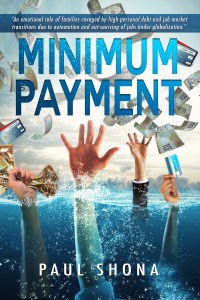
I am pleased to inform my readers/visitors that my third book – or the second fiction – titled

Minimum Payment

is now available at amazon.com as well as at Kindle, Barnes & Nobles, i-Books, and other retail outlets selling e-books.

The digital version is priced at US$2.99 and the print at $14.95. The book should soon be available at different international outlets of Amazon.com including that in Canada, the United Kingdom, India, Australia, and New Zealand, in their respective currencies.

Like my previous books, I have written this fiction under pseudonym ‘Paul Shona’.

Blurb:

A heart-touching tale of families ravaged by rising personal debt and changes in the labour market due to rapidly growing automation, computer and digital technology on one hand, and international trade agreements facilitating out-sourcing of jobs from high to low-wage countries, on the other.

You are welcome to place your order with the author at rajchawla6@yahoo.ca.

Transcript of my interview at Authors Show

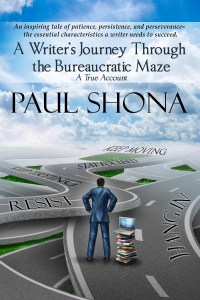
On October 5, 2017, I was interviewed at the Authors Show on my book “A Writer’s Journey Through the Bureaucratic Maze: A True Account.” This interview will be re-broadcast on October 30th and November 6th.

I am pleased to place the transcript of this interview.

Update, September 16, 2017

The digital version of my book – A Writer’s Journey Through the Bureaucratic Maze: A True Account – is now available at Apple’s iBooks, Kobo, Barnes & Noble, Inktera, Playster, Scribd, Tolino, and 24 Symbols.

Article from the ORLÉANS COMMUNITY NEWS, August 3, 2017

I am pleased to share with you all an article from the ORLÉANS COMMUNITY NEWS containing a short review of my latest book “A Writer’s Journey Through the Bureaucratic Maze: A True Account” as well as a brief reference to my debut romance fiction “Quest for Second Sex“. I sincerely thank the journalists – Brier Dodge and Nevil Hunt – for their kind words.

I may add here that both books are available in a downloadable Kindle edition – each at $2.99. The print versions are available at amazon.com at $14.95 and $21.99 respectively.

Both of my books are now available at Ottawa Public Library (OPL) and its branches.

I look forward to receiving your comments and/or reviews. Please mail these at rajchawla6@yahoo.ca.

Scanned at 04-08-2017 15-12 PM

Release of my second book – a non-fiction

I am pleased to announce the release of my second book – a non-fiction – titled A Writer’s Journey Through the Bureaucratic Maze: A True Account. Both its digital and print versions are now available at amazon.com (US$) and/or amazon.ca (C$). You can buy e-version at US$2.99/C$4.03, and print at $14.95/$20.19.

Blurb:

It’s a personal account of obstacles and challenges, I, as a writer, experienced during my journey lasting over four decades in the bureaucracy. During all of my professional life, I swam against the chin-high tidal waves and survived because of my inner strength. A must read tale of patience, persistence, and perseverance – the essential characteristics a writer needs to succeed.

URL for my books:

https://www.amazon.com/author/paulshona

Announcement

Please note that I will not be placing any new post on the site in the next 4-5 months as I am now focused on completing my next fiction entitled Minimum Payment. I will post the abstract of this fiction after completing its first draft – hopefully by the middle of October 2017. I am hoping to have it released by late December.

My non-fiction “A Writer’s Journey Through the Bureaucratic Maze: A True Account” was released in early June.

Thanks for visiting the site and your support and understanding.

Please feel free to contact me by leaving a message at the site, or by e-mailing me at rajchawla6@yahoo.ca.

Using debt wisely: a skill or a behavioral issue?

Introduction
To help Canadians manage their money better, the federal government established a Task Force in June 2009, and mandated it to make recommendations to the Minister of Finance on a national strategy to improve financial literacy of Canadians. This task force released its report in December 2010 with thirty recommendations, including one to conduct periodically a national Survey of Financial Capability of Canadians. The first such survey was conducted by Statistics Canada between February and March 2009, and a short report containing these data was released in December 2010.

The Task Force’s report entitled Canadians and their money: building a brighter financial future is available at http://www.edugains.ca/resourcesFL/Background/CanadiansAndTheirMoney-2011.pdf.

Is financial literacy program of any help?
To promote financial literacy is a topical concern – especially in the current environment when most Canadians are steadily increasing their indebtedness due to stagnant incomes, changing labour market providing more precarious than well-paying jobs, creating a gulf between the earnings of those with and without the marketable skills. Then, on the demographic side, we are witnessing more family dis-solutions resulting in more women-headed single parent families, most with jobs with low-to-medium hourly wage rates in the services sector, likely vulnerable to rely on consumer credit. Yet another demographic group likely to use credit constitutes the rising number of the elderly living on fixed incomes including work-related and/or private pensions, and benefits from Canada Pension Plan, Old Age Security, and Guaranteed Income Supplement.

Besides these labour market and demographic forces pushing individuals and families to use consumer credit, low interest rates and sky-rocketing prices of homes, making buyers to take mortgages beyond their financial means, are also likely pushing current and new or potential homeowners to rely more and more on consumer credit, including charge cards, unsecured lines of credit, and other secured and unsecured loans for their day-to-day spending needs. Unfortunately, as the rising prices of homes are making home ownership beyond the reach of many, it’s creating, on the other hand, a bonanza for all those renting properties. These landlords are free to raise rents year after year, making tenants to spend more and more on rent, and use charge cards and other loans to meet their day-to-day living expenses.

Then there are individuals, mostly with low education, unskilled, and holding short-term or temporary jobs, who in turn, can’t secure credit cards and/or loans issued by banks and/or other financial institutions. They have either been denied access to credit cards because of their low incomes, or have exhausted their permissible spending limits on their existing cards. A good number of these individuals turn to private lenders like Payday Loans, Money Marts, or Cash-on-the spot, and become their prey for life. Such lenders or money sharks thrive on such poorly educated needy low earners who are prepared to meet their daily needs with funds borrowed at exorbitant rates. My heart goes to such people. For them, paying one loan with another becomes a part of their life.

Even though the Canadian federal government in cooperation with several provincial governments have been introducing some measures to protect such borrowers paying sky-rocketing interest rates, the measures in place are largely focused on controlling interest rates, but not the borrowers’ behaviour, or options to use funds from other sources. Since Canada respects an individual’s freedom, values, and right to choose his/her lifestyle, an individual is free to borrow money from any source he/she so chooses.

Individuals and families living with no or little cash flow are presumably living in financially straitened circumstances. Granted, some may have voluntarily abused credit by spending frivolously on acquiring luxury goods, misused student loans, taking expensive holidays, maintaining a lifestyle they could hardly afford, stretched themselves beyond their means, but the majority use credit to meet their current essential and nonessential expenses. The question I ask here is if any financial literacy program can help such users of credit, instruct them to manage their money better, save more for the rainy day, or for children’s post-secondary education, and above all, save for personal retirement.

In my view, no financial literacy program is going to help such individuals if their day-to-day living is at stake and they simply need immediate access to cash – even if it means going deeper into indebtedness. For such individuals, the survival is at issue. For them, offering them any course guiding them to handle money properly is like a drop of water on an oily surface. The mere lecture about managing money is not going to help meet their financial needs, or their day-to-day challenges of survival.

On the other hand, the well-educated, holding skilled jobs with good wages and salaries wouldn’t really require such literacy program – partly because most of these have likely picked up some financial knowledge while pursuing higher education. They may not all be professional wizards, financial or money smarts, but such people can at least consider the pros and cons about choosing a lender, or comprehend the kind of loan agreement they are signing. According to the 2009 Survey of Financial Capability of Canadians, highly educated, high income, and financially knowledgeable individuals had much higher rate and amount of indebtedness than their low educated, low income, and not so financially literate, counterparts.

These better educated individuals, using credit wisely or unwisely, get credit at prevailing market interest rate, with scheduled payment plan from regular sources like banks, or other financial institutions. Their less educated, low income counterparts, on the other hand, would be more prone to turning to private lenders like Payday Loans, and Money Marts. The latter are likely to have either no clue about the aftermath of what they are doing by borrowing money from such lenders, or their need is so strong that they give a damn to what happens to them the next day, next week, next month. What they want is immediate access to cash money even if it leads them to a deep and suffocating hole.

Theoretically speaking, the financial literacy program should be good for low-to-mid income people who can’t handle or manage their money better. This program will indeed teach them a variety of skills to manage their money. However, what they really need first is a stable and a right frame of mind to concentrate on the learning process. And this they would have it only when they have good enough access to cash to meet their needs.

Once they have enough money, then only they can be taught some budgeting techniques, ways to save, ways to control spending, ways to use debt wisely, etc. In addition to helping Canadians to improve their financial capability, both the federal and provincial governments should introduce measures aimed at moderating the demand for credit – like moderating the rising prices of homes, volatility in both the real estate and financial markets, and consumers’ habits of spending borrowed money. For example, if we can bring down the purchase price of a home, we can also bring down the amount of mortgage debt required and its associated monthly payment – all resulting in a more cash, or lesser use of credit, for an owner. The sad part is that no government would like to introduce such measures controlling credit as all of these, in one form or another, essentially help the growth of the nation’s economy. And, who wants to stop that?

Empirical evidence that the financial literacy program is not working

Since 2009, the year the program was introduced by the federal government, Canadians overall owe more today than they did eight years ago. For instance, for each dollar of disposable income they made, they owed $1.67 in 2016 compared with $1.55 in 2009. Between these years, the overall household debt has risen from $1.4 trillion to $2.0 trillion – an increase of $600 billion. And, 80% of this increase is attributed to the increase in residential mortgages, and the other 20% to consumer debt. The rate of growth of total debt (42.8%) has outpaced the rate of growth in personal disposable income (32.3%). Put simply, Canadians are spending money they haven’t yet earned. It’s long-term effects are not good either for the economy, or for the future generation.

Using debt wisely – a skill or a behavioural issue?
Of the two debt components – residential mortgage and consumer debt – the indebtedness in respect to the former is by choice, and it’s considered as a good choice as long as it is made keeping viable affordability in mind, whereas that in respect to consumer debt is largely behavioural (with the exception of those with no savings or any cash flow, and who simply breathe on borrowed money).

Mortgage debt is considered as a good debt as it’s taken to purchase a home – one’s key asset over a lifetime – that also appreciates over time. As one pays off the mortgage debt over time, one builds equity in addition to the appreciation in the value of home due to the changes in the local and national real estate markets. This rising equity in home provides the owner some sense of future financial security. Any undertaking of mortgage debt requires some set of skills right from the choice of a lender to the negotiations about the amount sought, its amortization, interest rate, frequency of payments, lump sum payment without a penalty, etc. For example, an average person may opt for a monthly payment schedule whereas a more skilled may opt for a weekly payment, saving oneself thousands of dollars of interest by repaying borrowed money over a relatively shorter period.

Consumer debt, on the other hand, is largely considered as a bad debt as individuals use it for varying reasons – ranging from grocery shopping to taking holidays, paying off monthly bills, on-line shopping, taking cash advances – you name it. Since consumer credit is “cash available 24/7”, one uses it for day-to-day shopping of both essentials and non-essentials to satisfy one’s current needs or consumption, or maintain one’s lifestyle. The use of this credit also reflects one’s spending habits, or behaviour as a “sensible or conservative spender”, or a “compulsive or frivolous spender”.

Spending is a ‘behaviour’, and not a ‘skill’ to be learnt from any financial literacy program. For example, does one need any skill to order a product or book a vacation package on-line and pay by credit card? No. One wants something on the spot, orders it right away (impulsively or non-impulsively), and pays by readily available credit card, line of credit, or any other form of revolving credit. No second thought on the purchase, or any analytic aftermath.

The only way to control spending behaviour and its related borrowing is to learn to exercise some degree of self-control or budgetary restraints – which only a person him/herself can devise and implement. No classroom program is going to enforce it. How to exercise such restraints is a completely different topic, and beyond the scope of this short post.

Because of the prolific use of credit cards and easy access to lines of credit coupled with low interest rates, Canadians have increased their consumer debt load by 26% (or $118 billion) between 2009 and 2016. This translates to $46 million a day over seven years. That’s a hefty dose of daily consumer indebtedness that may even be hurting a particular segment of Canadians.

Tags:
Financial literacy, indebtedness, mortgage debt, amortization, equity in home, consumer debt, spending behaviour, conservative spender, frivolous spender, low-income, precarious job.